
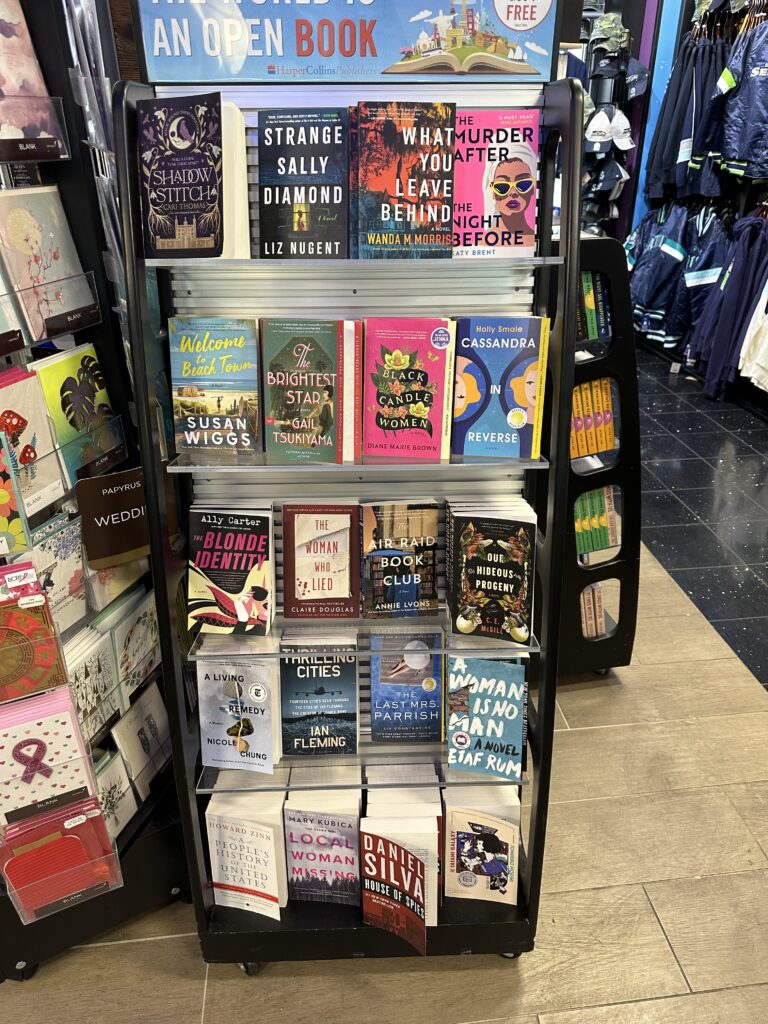
What makes a book cover sell? You have roughly three seconds. That’s the window a reader gives your book cover before deciding whether to click, pick it up, or scroll past. In that sliver of time, your cover must communicate genre, mood, quality, and intrigue, simultaneously.
As a professional book designer, I’ve created covers across genres from literary fiction to business nonfiction, and the 2 questions I hear most often from authors are: what actually makes a cover work? and what makes a book cover sell? Here’s what I’ve learned.
Instant genre recognition
Readers are genre detectives. They’ve absorbed thousands of covers in their favorite categories and developed instincts so sharp they can identify a cozy mystery from a romance novel in a fraction of a second. Your cover needs to satisfy those instincts.
This doesn’t mean your cover should look like every other book in the genre. It means it should speak the same visual language, the right color palette, typographic voice, and compositional style, while still feeling fresh and singular. A thriller that looks like a children’s picture book isn’t edgy, it’s confusing.
Typography that does the heavy lifting
The title and author name aren’t just text on a cover. They’re design elements that carry as much visual weight as any image. The typeface you choose sends a message before anyone reads a single word.
Serif fonts with elegant proportions read as literary or historical. Bold condensed sans-serifs feel urgent and contemporary. Handwritten scripts suggest romance or warmth. The weight, spacing, and sizing of your type communicates tone, and getting it wrong is one of the most common reasons amateur covers fail.
A single, compelling focal point
The strongest book covers are built around one dominant image or compositional element. Covers that try to show everything, multiple characters, several scenes, a collage of objects, end up showing nothing. The eye doesn’t know where to land.
Thumbnail size matters enormously here. Most readers discover books on their phone or on Amazon’s search results page, where your cover appears at roughly the size of a postage stamp. If the focal point doesn’t read at that scale, you’re losing sales before the potential buyer ever clicks through.
Color that creates emotion
Color isn’t decoration. It’s psychology. Warm reds and oranges signal energy, danger, and passion. Deep blues and purples evoke mystery, depth, and intellect. Muted earth tones suggest authenticity and literary weight. Bright, high-contrast combinations feel commercial and immediate.
The colors on your book cover will also need to work in digital storefronts with varied backgrounds. White covers can disappear on Amazon’s white background; very dark covers can get lost on a phone screen in low light. A professional designer thinks through all of these contexts.
Understanding color psychology is one of the most valuable tools a professional book cover designer brings to every project.
What makes a book cover sell vs. what holds it back
After reviewing thousands of self-designed covers, the patterns are consistent. Amateur covers tend to have too many fonts, low-resolution imagery, inconsistent spacing, and a layout that was designed at full screen size without testing how it looks as a thumbnail.
Professional covers start from a deep understanding of the genre, are built with high-quality licensed or custom imagery, and are refined through multiple rounds of testing at different sizes and in different storefronts.
If you’re ready to invest in a cover that answers the question of what makes a book cover sell, I’d love to talk. As a professional book cover designer with years of experience across every genre, I know what it takes to create a cover that stops browsers and converts them into buyers. Book a consultation with Dino Marino Design and let’s create something that gets your book noticed.